
Guide to West Virginia Divorce Records
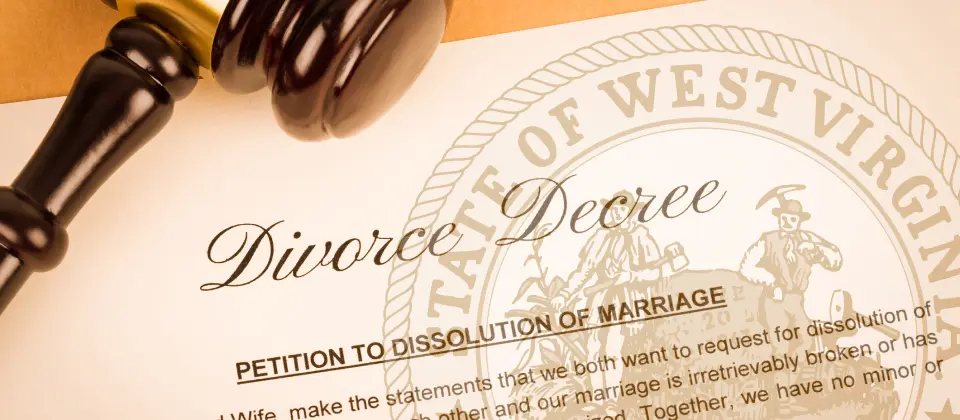
Divorce laws, as well as record access rules, vary significantly from state to state. West Virginia has its own legal procedures for ending a marriage and maintaining official divorce records.
In West Virginia, all divorce cases are handled through the State Court System. At each level of this process, a record is generated containing information about that step. These records provide an overview of what occurred during the case life cycle, from the original filing through to the entry of the Final Judgment. Usually, divorce records show how the court addresses issues such as property division, child custody, and financial support.
West Virginia divorce records contain varying information depending on the record and the nature of the divorce case. However, most divorce records typically include identification and decision-making information from the court. A standard divorce decree would have the following information:
Both spouses' names
The county where the divorce was finalized
The name of the court that handled the case
The case number
The reason for the divorce
How the couple's marital assets and any debts were divided.
Orders regarding child support and alimony
Judgment type
The date the final order was signed by the judge
Divorce records in West Virginia are usually located at the county level and are typically maintained by the Clerk of the Circuit Court where a divorce was filed and finalized. Records were traditionally stored on physical media such as paper files, bound volumes, and archived court documents at the courthouse. Older cases are still stored in these formats for those finalized prior to digitization.
In recent years, West Virginia has moved toward digital recordkeeping, which allows certain case information to be accessed through the courts' online systems. Full divorce decrees are not always available online, and access may depend on the county or the document's age.
Where Are West Virginia Divorce Records Stored?

At the county level, all official divorce case files (complete divorce decree documents) containing the legally binding final determination of divorce are maintained by the Circuit Court that finalized the divorce. Therefore, the Circuit Courts are the primary source of official, complete documentation of a divorce.
The West Virginia Department of Health and Human Resources, Health Statistics Center, is responsible for maintaining a statewide divorce index dating back to 1968. This division provides an index of divorce records and statistics, but does not offer certified copies of those records. Individuals seeking official divorce documents must contact the respective Circuit Court of the county where the divorce was finalized.
Is West Virginia a 50/50 Divorce State
Under West Virginia law, the state does not have an automatic “50/50” rule for dividing marital property. Rather, West Virginia uses the equitable distribution system. This means that courts will distribute all marital property according to what they determine is “fair” or “just,” given each spouse's individual roles in the marriage and their overall financial circumstances after divorce.
In West Virginia, the primary focus is not on an equal division of all marital assets. Rather, it is on fairly distributing those assets so that each spouse can support themselves financially from the time of the divorce forward.
When determining how to equitably distribute marital assets under West Virginia Code § 48-7-103, the judge is required to consider the totality of the parties' roles and responsibilities with regard to earning income during the course of the marriage and their respective projected incomes post-divorce.
Consequently, while the state starts with distributing marital assets fairly, it can adjust the division based on factors such as:
The Length of Marriage: Longer marriages are likely to result in a more equitable division of marital property; conversely, if one or both spouses have been married for a shorter period, it may be easier to deviate from a fair division.
Monetary Contributions: These are the monetary assets each spouse brought into their marriage, including their incomes. Examples include money earned at work and the use of the spouses' separate property during the marriage.
Non-monetary Contributions: The non-financial efforts made by each spouse to support their family. These include homemaker activities such as caring for children, managing the home, improving the couple's real estate, or working in the family business.
Earning Ability of Each Spouse: Whether one spouse gave up their opportunity to gain education, training, or experience, which would have allowed them to earn an income, or whether one spouse has given up an employment opportunity to help the other spouse with their career.
Misappropriation of Property: Whether one spouse has wasted, damaged, or devalued any property owned jointly by the couple. In determining this issue, courts will consider only the financial consequences of a spouse's actions and not fault issues such as adultery.
Future Needs and Circumstances: Factors considered include the ages of each spouse, their physical and mental health, whether they have any responsibility for supporting minor or adult children who depend on them, among other considerations, all of which will affect how marital assets are distributed.
Types of West Virginia Divorce Records

Divorce records do not have the same purpose. Some divorce records verify that a divorce occurred, while others detail all the court's decisions. The type of record you need will depend on whether you need the document to prove a divorce occurred or you want to know all the details of what the court decided.
West Virginia Divorce Indexes
Maintained by the West Virginia Department of Health and Human Resources (DHHR), divorce indexes represent state-level documentation that can help you find your divorce case. Divorce indexes are databases that list basic information about divorces, such as names, dates, and the counties where the divorces were granted. Divorce indexes make it easier to find the divorce case you want.
Although divorce indexes contain information about divorce, they are not the same thing as divorce certificates. The function of the index is to assist you in locating the right divorce case to obtain copies of. Divorce certificates, on the other hand, are official documents proving the dissolution of a marriage. For this reason, divorce indexes are considered uncertified documents and may not be acceptable for use in legal or administrative purposes, such as remarriage or enforcement.
West Virginia Divorce Certificate (Certificate of Divorce)
In West Virginia, officially approved divorce certificates are generally issued by counties. They are typically issued by the Circuit Court Clerk's Office in the county where your divorce was granted. These documents provide basic information regarding both parties (names), when the divorce was granted, and what county it was filed in.
Divorce certificates serve as documents proving a marriage has been legally terminated. This document can be useful for updating identification records, applying for a new marriage license, or completing administrative and financial requirements.
However, a divorce certificate is not the same thing as a divorce decree. A divorce decree includes the court's decisions regarding all aspects of the divorce, including how assets will be divided, who receives physical custody of children, and if child or spousal support is required. Since a divorce certificate only proves a marriage has been legally terminated, you would need a certified copy of the original Decree to enforce the terms of your divorce.
West Virginia Divorce Decree (Final Order of Divorce)
Issued by the West Virginia Circuit Court, a divorce decree, also called a Final Order of Divorce, is the legally binding order that finalizes a divorce. It contains all of the judge's findings and is needed for enforcement or understanding any of the terms and conditions of the divorce.
Property and Debt Division: The Final Order of Divorce defines the division of all marital assets and debts. Assets can include houses, cars, and bank accounts. Liabilities can include mortgages, credit card debt, and loans.
Child Custody and Support: The divorce decree states the specific custodial arrangements for each parent, their respective decision-making rights regarding their children, visitation rights, and timeshare. In addition, it establishes the amount of child support each parent will pay to the other.
Alimony: One spouse may be required by the court to provide financial assistance to the other party. The decree will provide details about the amount, duration, and any terms or conditions that must be met in order to receive or modify alimony.
Final Judgment Date: The decree will provide the official date that the divorce is finalized. This date is very important for matters such as remarriage, enforcement, appeals, etc.
How to File for Divorce in West Virginia (Step-by-Step)
Before you file for a divorce in West Virginia, either spouse must meet the residency requirements. West Virginia Code Section 48-5-105 outlines the different rules based on whether the couple was married in West Virginia or elsewhere.
Married in West Virginia: There is no time requirement for how long the couple must have resided in the state before filing for divorce. The couple may file their divorce petition at any time, provided they are actual residents at the time of filing.
Married out of State: Either spouse must have resided in West Virginia continuously for at least one year prior to filing.
The residency requirement ensures that the courts of West Virginia have jurisdiction over the couple's dispute and that the court will not entertain a fraudulent claim.
Next, you need to determine whether you are filing for a contested or uncontested divorce.
An uncontested divorce occurs when both spouses agree on the major issues involved in a divorce, such as dividing assets, determining child custody, setting child support, and whether either party will receive spousal support. Since both parties have agreed to these items, an uncontested divorce can proceed, usually without the need for a courtroom trial.
Typically, judges will expedite approval of uncontested divorces so long as they find that the couple's agreements are reasonable, consistent with state law, and include everything necessary to dissolve the marriage.
A contested divorce occurs when both spouses disagree on at least one key element of the dissolution of marriage. These issues may include the division of marital assets and debts, the determination of parental responsibility for children, and the allocation of financial support.
Due to the parties' inability to agree on these elements, the divorce process can become lengthy, complicated, and expensive. Usually, contested divorces involve the exchange of financial information, negotiation, and mediation to resolve disputes. In addition, it may involve attendance at multiple court hearings,
Ultimately, if all other avenues are exhausted, a judge will decide on the remaining unresolved issues. As a result, contested divorces generally take much longer to complete than uncontested divorces.
Step-by-Step Divorce Process
Irrespective of the county you live in, West Virginia, the steps to file for divorce will generally follow these steps.
Prepare the Filing Packet
Before filing for divorce, you need to prepare the following documents and define the divorce pathway.
Identify the Divorce Path (1A vs. 1B): Determine whether your divorce would be uncontested or contested.
Typical Documents: Here are the documents you need to file for a divorce in West Virginia:
Petition for Divorce (SCA-FC-101): It is the formal petition that commences the divorce action.
Petitioner's Civil Case Information Statement (SCA-FC-103): This form provides the court with relevant information to assist in its decision-making, and it must be filed when the petition is filed.
Financial Statement (SCA-FC-106): Describes both parties' income, assets, and liabilities.
Information Requested by Division of Vital Statistics(SCA-FC-104): Used for the purpose of maintaining the state's records.
Other forms required to file for a divorce in West Virginia include the Petition, Proposed Parenting Plan, and Worksheet for Individual Proposed Parenting Plan. You can use the Petitioner's Divorce Filing Packet Instructions as a guide when completing each form. All forms required to file for a divorce in West Virginia are available on the West Virginia Judiciary Divorce Forms page.
In addition to court forms, other documents needed to file for a divorce include a marriage certificate, proof of residency, income records, tax returns, bank statements, property records, and loan documents. Other records required include debt records, vehicle titles, and prenuptial or postnuptial agreements.
Filing Fees and Fees Waivers (Indigency): The filing fee for a divorce petition in West Virginia is approximately $135. There is also a fee of around $25 to have the sheriff's department serve your spouse with formal papers. If you are unable to pay for either of those fees, the West Virginia courts allow you to request a fee waiver by submitting an Eligibility for Waiver of Fees (Form SCA-C&M201). After the court reviews your application and determines that you meet the requirements financially, it will reduce or eliminate the filing and service fees.
File the Case
After you have prepared the documents, the next step is to officially file the divorce case at the appropriate court in West Virginia.
Where to File: Divorce petitions are filed in the Circuit Court in the County in which one or both parties reside. The Circuit Court has exclusive jurisdiction over family law matters throughout West Virginia.
Filing Methods: Depending on the county, the divorce filing packet can be submitted in one of the following ways:
In Person: Completed and notarized petition forms can be hand-delivered to the Clerk of Circuits Office located at your county courthouse.
Mail: The petition form and applicable fees may be mailed to the Clerk of Circuits.
E-Filing: The CourtPLUS E-File System is operational in all 55 counties throughout West Virginia. Although attorneys are generally the primary users of e-filing through CourtPlus, registered users may submit documents electronically and receive service copies of such documents.
What You Receive: The Clerk will issue the following after receiving the divorce petition and confirming your payment:
Case Number: This number identifies your divorce case and is required for all future filings associated with your divorce proceeding.
Summons: If there is a dispute involved in your divorce action, the Clerk will sign, seal, and issue a summons that must be served on the opposing party to inform them that they have been sued.
Initial Hearing Notices: You will receive a scheduling order or initial hearing notice (case management) from the court, usually within thirty to sixty days after filing.
Service of Process (Primarily for Contested Cases)
In West Virginia, when a Divorce action is initiated, the person who starts the action (Petitioner) has to formally give notice to the opposing spouse (Respondent). This service has to occur within 120 days of the date the Petition was filed, or the case will be dismissed. The Petitioner cannot serve these documents themselves. The methods of service approved in West Virginia include:
The Sheriff's Department: Once you have provided the Circuit Clerk with your fee and the Respondent's address, they will forward this information to the local sheriff, who will deliver the papers to the Respondent at their home or workplace.
A Private Process Server: You can also hire a private server (a qualified adult who has no interest in the outcome of this case) to personally hand-deliver the documents.
Certified Mail: The Circuit Court clerk can send the documents via certified mail. To make certified mail a valid service, the respondent must personally sign the green return receipt.
The court cannot move forward on your divorce case until proof of service has been completed and filed with the Circuit Clerk.
If you are unable to locate your spouse after conducting reasonable searches, such as contacting relatives, employers, or other public records sources, you will need to submit an affidavit stating this. You will also need to file a motion requesting alternative service. If the court grants it, you may be allowed to publish a legal advertisement in a local newspaper once each week for two consecutive weeks as an alternate service method
Early Case Phase and Temporary Orders
Temporary orders are used in West Virginia during the early case phase of a divorce. The purpose of these orders is to help maintain stability during the ongoing divorce proceedings. They also serve to define both parties' rights and responsibilities regarding their property and children until a Final Decree is entered by the court.
One of the main goals of issuing temporary orders is to provide stability for the parties' minor children. When determining whether to issue temporary orders governing child support, spousal support, or custody, the court typically aims to maintain the “status quo.” They do this by maintaining the people who have been providing childcare or support, to minimize disruptions to their family lives and ensure continuity.
Temporary Orders may address many practical issues, such as:
Temporary Custody and Visitation: The court may make arrangements for the care of minor children (who will have legal custody and with whom they will spend time) while the divorce is being processed.
Temporary Child or Spousal Support: The court may order that one spouse pay the other, or, for the benefit of the minor children, to meet basic living needs until a final determination is made on spousal and child support.
Exclusive Use of the Marital Residence: One spouse may be granted exclusive use of the family home by the court to help minimize conflict during the pendency of the action.
Restraining or Protective Order: If either party believes it is necessary to protect from personal abuse or harassment, the court may enter a temporary restraining or protective order to protect both parties.
Financial Disclosures and Discovery
Both parties are expected to disclose their finances completely and honestly during the divorce process to ensure an equitable resolution. Elements of discovery in West Virginia include:
Mandatory Disclosure: To make fair determinations regarding asset distribution, child support, and spousal support, each spouse has a duty to fully disclose their current and past financial history. The disclosure should include the following types of information: assets, income from various sources, and liabilities. Financial disclosures form the basis for determining how to fairly divide marital property and for establishing child support and spousal support.
Discovery Tools: If your divorce case is a contested one, there are several methods available for you when it comes to gathering information on your ex-spouse's financial situation. You can use the following discovery tools to achieve a fair settlement with regard to alimony, property division, and other similar issues:
Requests for Documents: Allow one spouse to specifically request certain documents from the other, such as bank statements and tax returns.
Interrogatories: Written questions that are sent by one party to another requesting answers in writing, under oath, to help an attorney understand details regarding each party's financial situation.
Subpoena: A legal document issued to a third party, such as a bank, employer, or institution, to produce documents relevant to the case.
Depositions: In-person or virtual questioning of witnesses or parties under oath. Deposition occurs in the presence of both attorneys and is recorded for presentation at trial.
Case Management and Court Conferences
The courts will sometimes hold case management conferences. The purpose of these conferences is to help control and direct the case's progress. Typically, during a case management conference, the court reviews the status of the case, verifies that all document exchanges have occurred and when. It also sets a deadline for completing future stages of the case, including discovery or temporary orders.
The court may also conduct a pretrial conference. At this point, the court identifies the issues still in dispute and encourages the parties to settle them. Pretrial conferences provide the court with an opportunity to identify which issues remain in contention and require a decision at trial. It also confirms that both parties have sufficient evidence and documentation available to support their positions at trial.
By this time, most judges will expect that both parties have
Met their obligation of mandatory disclosure
Responded in good faith to discovery requests
Attempted to negotiate or mediate outstanding issues before requiring additional court involvement
Settlement or Trial
Spouses have two options for resolving their divorce: a settlement or a trial. Most divorces are settled out of court before proceeding to trial. This saves time and money and gives spouses greater control over the final decision regarding the terms of their divorce. In West Virginia, spouses can settle their divorce using these methods:
Negotiate directly
Mediated negotiations via a neutral third-party
Attorney-led negotiations
If a couple is unable to agree to an acceptable settlement agreement, they will proceed to trial. At that point, a judge will review and consider all the evidence presented during the trial. The judge will also hear testimony from any witnesses and review financial information provided during the trial. Both parties will typically provide written recommendations on how property, spousal support, and child custody matters should be decided. The judge then issues a final divorce decree, which legally determines the rights and obligations of each spouse.
Judgment, Waiting Periods, and Finalization
In West Virginia, after a judge grants a divorce, the divorce becomes official when the court enters a Final Divorce Order. The legal definition of this process is contained in West Virginia Code § 48-1-227.
West Virginia has no time limit (waiting period) between filing for divorce and when the divorce will be finalized by the court. Similarly, there is no waiting period in West Virginia to remarry; once the Final Decree is issued, recorded, and becomes effective, a person may lawfully remarry.
Child Custody and Child Support in West Virginia Divorces
In West Virginia, the “best interest of the child” is the standard used for all custody determinations under West Virginia Code § 48-9-102. This means that the courts will always attempt to decide what is best for the children. Therefore, the court's first priority is to protect the children's well-being, stability, and overall growth. When making custody decisions, rather than randomly choosing which parent the child should live with, the court examines the relevant factors, including:
Each parent's ability to provide for the care of the children and to meet the needs of the children
The emotional bonds established between the children and each parent
The needs of the children for stability, continuity, and consistency in caregiving
Past involvement of each parent in caring for the children
Any history of domestic violence, abuse, or neglect between the parties
Which spouse has encouraged a continued relationship with the other parent
Legal Custody vs. Physical Custody
West Virginia law divides custody into two categories: Legal Custody and Physical Custody, pursuant to West Virginia Code § 48-9-202 and West Virginia Code § 48-9-207, respectively.
Legal custody means that a parent has the authority to make important decisions regarding the child's life, which include decisions regarding the child's education, health care, and religion. In general, courts encourage shared decision-making. However, when it appears that there will be continuing conflict between the parties or there are concerns regarding the child's safety, the court may grant one party decision-making authority.
Physical custody, referred to as “physical custodial responsibility” in West Virginia Statutes, addresses where the child shall live and how time is allocated between parents. In West Virginia, the court determines what is in the best interest of the child and then awards parenting time accordingly. The arrangements can result in equal parenting time, with one parent designated as having primary residency and the other receiving scheduled parenting time.
Child Support Guidelines and Enforcement
West Virginia uses the Income Shares Model established by West Virginia Code § 48-13-301 to determine the amount of child support payable. When making this determination, the state considers certain factors, including:
The gross Income of both parents
The number of children
Parenting time arrangement
Child care expenses
Costs related to obtaining health insurance for the child
West Virginia treats child support as a “right of the child.” For this reason, if either parent fails to make timely payment or pays less than the required amount, the state takes action to collect the child's arrears. Some enforcement tools used include:
Automated wage garnishments
Seizure of state or federal tax refunds
Suspension of driver's licenses and professional licenses
Placing liens against property and financial accounts
Contempt of court proceedings, including fines and incarceration
Property, Debt, and Alimony in West Virginia Divorces
The court determines how marital property will be divided, what debts will be paid, and whether spousal support (alimony) will be ordered in a West Virginia Divorce.
Marital property, as defined by West Virginia courts, refers to all property and income that either spouse receives during the time they are married, regardless of who holds title on that property. This also includes an increase in the value of separate property if that increase resulted from marital funds or other marital effort.
Separate property, on the other hand, is any property owned before either spouse was married. It also includes any property received through gift or inheritance, property agreed by the spouses to exclude, or any property acquired by the spouses after the date of their separation.
In West Virginia, separate property cannot be split unless it becomes mixed up with marital assets.
As with marital assets, West Virginia courts divide marital debts fairly and equitably. When dividing marital debts, including auto loans, mortgage, or credit cards, between the two parties, the court will look at the following:
The ability of each party to pay its portion of the debt.
Which spouse incurred the debt
Did both parties benefit equally from taking on this debt?
Who was responsible for the debt?
How does the distribution of marital property affect the division of marital debt?
West Virginia establishes four forms of spousal support as follows:
Temporary (Pendente Lite) Alimony: Temporary support for both parties while the divorce is being finalized.
Permanent Alimony: Permanent support for the dependent party if there was a long marriage. The dependent party will be unable to be self-sufficient.
Rehabilitative Alimony: Support to enable an ex-spouse to get education/training/employment so they can become self-supportive.
Gross Alimony: A single, large sum of money paid either as a one-time lump sum or paid out over time, and is not modifiable.
Errors, Omissions, and Corrections in West Virginia Divorce Records
Divorce documents often contain incorrect or missing data that will need to be corrected. Examples of common errors include: misspellings of names, incorrect marriage or divorce dates, incorrect case numbers, and incomplete or inaccurate data regarding property settlement, custody, or spousal or child support.
To make such corrections, a typical procedure would be to request the correction through the Circuit Court where the original divorce decree was filed. If the error is substantive, it typically involves filing a motion to amend or correct the record, which usually requires a judge's approval. Minor clerical errors can sometimes be corrected by the court clerk.
After making corrections to your divorce document, you can contact the Circuit Court clerk's office and request certified copies of your amended divorce records (certificate and decree).
How to Access West Virginia Divorce Records

There are various methods to obtain a divorce record in West Virginia. These will depend on whether you simply want to find divorce information or a certified copy of the divorce decree.
Online
Divorce Indexes or limited certificate data are accessible through the West Virginia Department of Health and Human Resources. Certified copies of divorce decrees, however, are rarely available online for free. While you can access divorce information through the Court Access Online, the information is usually limited. Official certified copies of court records, however, must be requested from the issuing court.
In Person
You can obtain a certified divorce decree or certificate from the Circuit Court Clerk in the County where the divorce was issued. Most Circuit Courts provide same-day service.
By Mail
Divorce Records (certificates and decrees) can also be requested by mailing a request to the Circuit Court Clerk in the county where the divorce was filed. A person requesting divorce records must include identification, payment of fees, and a self-addressed stamped envelope.
West Virginia Courthouses That Handle Divorces
If you intend to file for divorce in West Virginia, it is essential for you to know which court handles divorce cases and where you can look up the divorce records after the case has been finalized.
Court Authority for West Virginia Divorce Cases
In West Virginia, Circuit Courts handle every single aspect of divorce proceedings. Circuit Courts also handle matters related to divorce, including child custody, spousal support, and the division of marital property. A Circuit Court is the only type of court in West Virginia that can issue a Final Judgment in Divorce, which makes it the only place to get a legal record of your divorce.
County-Based Filing
Divorce cases are filed at the Circuit Court in the county where either spouse resides. This means the correct courthouse depends on the couple's location at the time of filing. Examples of counties where you can obtain a final divorce decree in West Virginia include:
Kanawha County: Kanawha County Circuit Court
Monongalia County: Monongalia County Circuit Court
Cabell County: Cabell County Circuit Court
Berkeley County: Berkeley County Circuit Court
Raleigh County: Raleigh County Circuit Court
Jurisdiction Basics
Each Circuit Court operates within a specific geographic area, known as a judicial circuit, and has authority over cases filed within that county or circuit. The court handles the entire divorce process, from the initial filing to the issuance of the final judgment, ensuring that all legal requirements under West Virginia law are met.
Therefore, no other court in West Virginia, from Magistrate Courts to Municipal Courts, has authority to hear divorce matters or issue a final judgment for a divorce case.
Examples of West Virginia Circuit Courts
Each of West Virginia's 55 counties is home to at least one Circuit Court, the primary general-jurisdiction trial court that handles cases ranging from family disputes to felonies. Here are examples of Circuit Courts in West Virginia:
Kanawha County Circuit Court (13th Judicial Circuit of West Virginia)
Monongalia County Circuit Court (17th Judicial Circuit of West Virginia)
Cabell County Circuit Court (6th Judicial Circuit of West Virginia)
Wood County Circuit Court (3rd Judicial Circuit of West Virginia)
Harrison County Circuit Court (2nd Judicial Circuit of West Virginia)
Jefferson County Circuit Court (23rd Judicial Circuit of West Virginia)
Role of the Circuit Court Clerk
The Circuit Court Clerk's Office provides a variety of functions within the divorce process, including:
Receiving and processing divorce pleadings
Storing the official records of all divorces
Issuing certified copies of divorce records when requested by the parties involved in the divorce
Providing the assigned case number to each divorce proceeding and managing case tracking
Providing basic filing instructions and requirements
FAQ
Are Divorce Records Public in West Virginia?
Yes, West Virginia considers divorce records public records for at least 50 years after the divorce is granted. Before the 50-year period elapses, access to these records is limited to the parties involved and their attorneys or authorized representatives. While case information on a divorce is public, sensitive files such as financial disclosures and child custody details may be sealed.
What Is the Difference Between a Certificate and a Decree?
A divorce certificate is a simple document that proves a divorce occurred, whereas a divorce decree is the comprehensive court document that outlines all binding terms of the divorce, including asset division and support orders. The decree is the legal ruling, and the certificate is the vital record.
Do I Need to Know the County?
Yes, knowing the county is very important because divorce records are filed and maintained at the county level in the Circuit Court where the divorce was granted. Without the correct county, it can be difficult to locate or request the record. State indexes may help you identify the correct county if you are unsure.
How Far Back Do Records Go?
Divorce records in West Virginia can date back many decades, depending on the county. State-level indexes are generally available from 1968 onward, while older records are typically maintained by the individual Circuit Courts or state archives. Availability may vary based on record retention practices.
How Much Does It Cost?
The cost of obtaining divorce records in West Virginia varies by county and the type of record requested. Certified copies of divorce decrees typically require a fee (often around $5 to $25 per copy), while additional charges may apply for record searches or certification.
Can I Search West Virginia Divorce Records for Free?
You may be able to search basic divorce information or indexes for free through state resources. However, obtaining official or certified copies of divorce records usually requires payment of a fee.
Table of Contents
- Where Are West Virginia Divorce Records Stored?
- Is West Virginia a 50/50 Divorce State
- Types of West Virginia Divorce Records
- How to File for Divorce in West Virginia (Step-by-Step)
- Step-by-Step Divorce Process
- Child Custody and Child Support in West Virginia Divorces
- Property, Debt, and Alimony in West Virginia Divorces
- Errors, Omissions, and Corrections in West Virginia Divorce Records
- How to Access West Virginia Divorce Records
- West Virginia Courthouses That Handle Divorces
- FAQ